- Shocking! Mixed Bathing Was Normal in Edo Period! The Unbelievable Bathing Culture
- 江戸時代のお風呂事情、マジで面白い!🛁 Edo Period Bathing Culture is Seriously Fascinating! 🛁
- 銭湯は江戸のホットスポット Public Bathhouses Were Edo’s Hot Spots
- 入口がめっちゃ低い謎仕様 The Mysteriously Low Entrance
- 石鹸がない時代、何で洗ってたの? What Did They Wash With in an Era Without Soap?
- 番台のおばちゃん(おじちゃん)は見てる! The Attendant on the Platform is Watching!
- 混浴がフツーってマジ?Was Mixed Bathing Really Normal?
- 銭湯は究極の社交場だった Bathhouses Were the Ultimate Social Gathering Place
- 江戸っ子は本当に風呂好き Edokko Really Loved Baths
- 世界が驚いた江戸の清潔さ The World Was Amazed by Edo’s Cleanliness
- 後書き / Conclusion
- 共有:
Shocking! Mixed Bathing Was Normal in Edo Period! The Unbelievable Bathing Culture
前書き / Introduction
毎日当たり前のように入っているお風呂。でも、江戸時代の人たちのお風呂事情を知ったら、きっとびっくりするはず!混浴、番台から丸見え、石鹸なし…今では考えられない世界が広がっていました。でも実は、そこには現代にも通じる「人とのつながり」や「清潔を大切にする文化」があったんです。タイムスリップ気分で、江戸時代の銭湯文化を覗いてみましょう!
We take baths for granted every day. But if you knew about bathing customs in the Edo period, you’d be amazed! Mixed bathing, being watched from the attendant’s platform, no soap… It was a world unimaginable today. Yet there was actually a culture of “human connection” and “valuing cleanliness” that resonates even now. Let’s take a time-traveling peek into Edo period bathhouse culture!
江戸時代のお風呂事情、マジで面白い!🛁 Edo Period Bathing Culture is Seriously Fascinating! 🛁
みんな、毎日お風呂入ってるよね?実は江戸時代の人たちも超お風呂好きだったんだよ。でも今とは全然違って、めっちゃユニークな世界が広がってたんだ!
Everyone takes a bath every day, right? Actually, people in the Edo period were also super bath lovers. But it was completely different from today – an incredibly unique world!
銭湯は江戸のホットスポット Public Bathhouses Were Edo’s Hot Spots
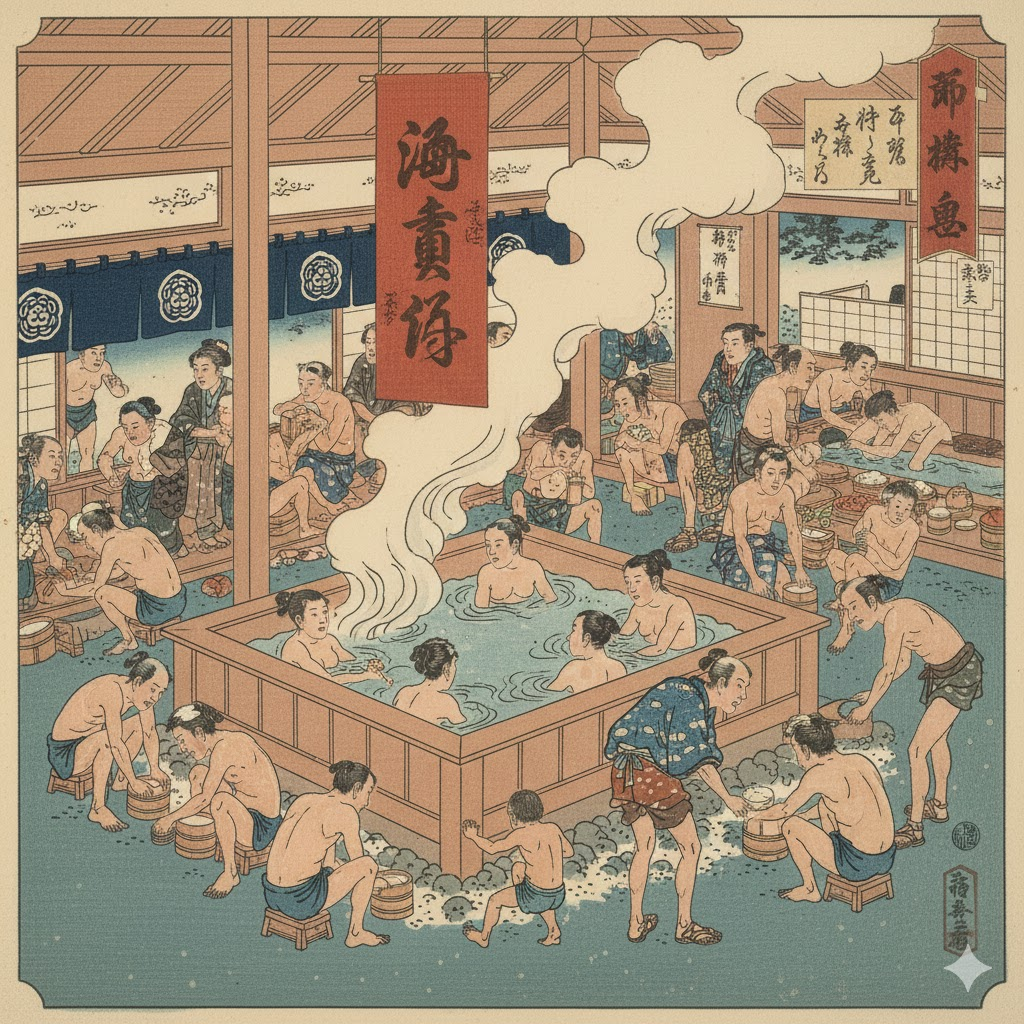
江戸時代、家にお風呂がある家なんてほぼゼロ。だから銭湯(せんとう)が大流行!江戸の町には600軒以上もあったんだって。コンビニより多かったかもね(笑)
In the Edo period, homes with baths were basically zero. So sento (public bathhouses) became hugely popular! There were over 600 in Edo city. Maybe more than convenience stores today (lol)!
料金は大人で4〜8文。今のお金で100円くらい。超安い!だから毎日通う人も多かったんだよ。
The price was 4-8 mon for adults. About 100 yen in today’s money. Super cheap! So many people went every day.
入口がめっちゃ低い謎仕様 The Mysteriously Low Entrance
当時の銭湯には「石榴口(ざくろぐち)」っていう、身をかがめないと入れない超低い入口があったの。なんでかっていうと、お湯の熱気を逃がさないため。
Bathhouses back then had something called a “zakuroguchi” – an extremely low entrance you had to crouch to enter. Why? To keep the steam from escaping.
中に入ると真っ暗で、もわ〜っと蒸気が充満してて、今でいうサウナみたいな感じ。湯船というより蒸し風呂に近かったんだ。慣れるまで大変そう…!
Once inside it was pitch dark, filled with billowing steam – kind of like today’s saunas. It was more like a steam bath than a bathtub. Sounds tough to get used to…!
石鹸がない時代、何で洗ってたの? What Did They Wash With in an Era Without Soap?
ここで衝撃の事実。江戸時代には石鹸がなかった!
Here’s a shocking fact. There was no soap in the Edo period!
じゃあ何使ってたかっていうと:
So what did they use?
- 糠(ぬか):米のぬかを袋に入れてゴシゴシ
- うどん粉:小麦粉で身体を洗う
- ヘチマ:天然のスポンジ代わり
- 灰:髪の毛を洗うのに使ってた
- Nuka (rice bran): Put rice bran in a bag and scrubbed with it
- Udon flour: Washed bodies with wheat flour
- Luffa: Used as a natural sponge
- Ash: Used to wash hair
石鹸が日本に入ってきたのは幕末。最初は超高級品で、庶民には手が届かなかったんだって。
Soap came to Japan at the end of the Edo period. At first it was a super luxury item that common people couldn’t afford.
番台のおばちゃん(おじちゃん)は見てる! The Attendant on the Platform is Watching!
銭湯の真ん中には「番台(ばんだい)」っていう高い台があって、そこに番頭さんが座ってたの。
In the middle of the bathhouse was a high platform called “bandai” where the attendant sat.
番台の役割は:
The bandai’s roles were:
- お金を受け取る
- 客の様子を見張る(喧嘩やトラブル防止)
- 時間を知らせる
- 男湯も女湯も両方見える位置にいた(え、マジで?)
- Collecting money
- Watching customers (to prevent fights and trouble)
- Announcing the time
- Being in a position to see both men’s and women’s baths (Wait, seriously?)
そう、番台からは男湯も女湯も丸見えだったんだよ。プライバシーって概念、ゆるかったんだね(笑)
Yes, from the bandai you could see both the men’s and women’s baths clearly. The concept of privacy was pretty loose back then (lol)!
混浴がフツーってマジ?Was Mixed Bathing Really Normal?
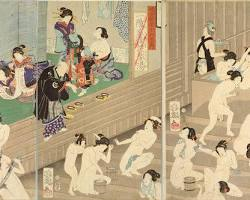
これがまた驚きなんだけど、江戸時代初期は男女混浴が当たり前だったの!
This is even more surprising, but mixed bathing between men and women was completely normal in the early Edo period!
幕府は「ダメだよ!男女別にしなさい!」って何度もお触れ(法律みたいなもの)を出してるんだけど、全然守られなかった。なんと寛政時代(1789-1801年)まで混浴が続いてた地域もあるんだって。
The shogunate issued many edicts (like laws) saying “No way! Separate men and women!” but they weren’t followed at all. Amazingly, mixed bathing continued until the Kansei era (1789-1801) in some areas.
理由は単純:
The reasons were simple:
- 別々にすると建物が大きくなってお金がかかる
- みんな慣れちゃってて気にしてなかった
- 「裸の付き合い」が文字通りだった
- Separating them would make buildings bigger and cost more money
- Everyone was used to it and didn’t mind
- “Naked friendship” was literally that
さすがに江戸時代後期になると、少しずつ男女別が増えていったけどね。
Naturally, in the late Edo period, gender separation gradually increased.
銭湯は究極の社交場だった Bathhouses Were the Ultimate Social Gathering Place
これが一番面白いポイント!江戸の銭湯はただお風呂に入る場所じゃなかったんだよ。
This is the most interesting point! Edo bathhouses weren’t just places to bathe.
情報交換の場 A Place for Information Exchange
- 「隣の旦那、商売うまくいってるらしいよ」
- 「あそこの店、新しい商品入ったって」
- 「火事があったらしいぞ」
- 今でいうSNSみたいに、ここで情報がバンバン広まった
- “The neighbor’s husband’s business is doing well, I hear”
- “That shop got new products”
- “There was a fire, apparently”
- Like today’s SNS, information spread rapidly here
二階が超重要スポット The Second Floor Was a Super Important Spot
銭湯の二階には休憩所があって:
The bathhouse second floor had a rest area where people would:
- お茶飲んだり
- 碁や将棋を楽しんだり
- 友達とおしゃべりしたり
- Drink tea
- Enjoy go and shogi
- Chat with friends
でもね、「湯屋の二階」っていうのは当時、男女が密会する場所としても有名だったの。ちょっとドキドキな雰囲気もあったんだね(笑)
But you know, “the second floor of the bathhouse” was also famous back then as a place for men and women to meet secretly. There was a bit of a thrilling atmosphere too (lol)!
コミュニティの中心 The Center of the Community
長屋に住む人たちにとって、銭湯は:
For people living in tenement houses, the bathhouse was:
- ご近所さんと仲良くなる場所
- 仕事の情報をもらえる場所
- 悩みを相談できる場所
- A place to befriend neighbors
- A place to get job information
- A place to consult about worries
まさに江戸時代版コミュニティセンターだったわけ!
It was truly an Edo-period community center!
江戸っ子は本当に風呂好き Edokko Really Loved Baths
「江戸っ子は宵越しの銭を持たない」っていう有名な言葉があるでしょ?これ、お金をパーッと使っちゃうってことなんだけど、お風呂代だけはケチらなかったんだって。
There’s a famous saying “Edokko don’t hold money overnight,” right? This means spending money freely, but they never skimped on bath fees.
1日働いて疲れた身体を、銭湯でさっぱり洗い流す。これが江戸っ子の最高の贅沢だったんだよ。
Washing away the day’s fatigue at the bathhouse was the ultimate luxury for Edokko.
世界が驚いた江戸の清潔さ The World Was Amazed by Edo’s Cleanliness
この風呂好き文化のおかげで、江戸は世界一清潔な都市だったって言われてるの。
Thanks to this bath-loving culture, Edo was said to be the world’s cleanest city.
幕末に日本に来た外国人たちが「日本人はみんな毎日風呂に入ってる!信じられない!」って驚いたって記録が残ってる。当時のヨーロッパなんて、お風呂に入るのは年に数回とかザラだったからね。
Records show that foreigners who came to Japan at the end of the Edo period were amazed, saying “All Japanese people bathe every day! Unbelievable!” In Europe at that time, bathing just a few times a year was common.
後書き / Conclusion
どう?江戸時代の銭湯、めっちゃ面白くない?
So, wasn’t Edo period bathing culture super interesting?
混浴あり、番台から丸見えあり、二階で密会ありの、今じゃ考えられないカオスな空間。でもそこには人と人とのつながりがあって、みんなが楽しく集まる場所だったんだよね。
Mixed bathing, being visible from the bandai platform, secret meetings on the second floor – a chaotic space unimaginable today. But there was human connection there, a place where everyone happily gathered.
現代のスーパー銭湯も楽しいけど、江戸の銭湯にタイムスリップしてみたいって思わない?(混浴はちょっと勇気いるけど…笑)
Modern super bathhouses are fun too, but don’t you want to time-travel to an Edo bathhouse? (Though mixed bathing would take some courage… lol)
江戸時代から続く「お風呂でリラックス」「お風呂でコミュニケーション」という文化。私たちは今も、その伝統を受け継いでいるのかもしれませんね。次に銭湯やスーパー銭湯に行くときは、江戸時代の人たちに思いを馳せてみてください。きっといつもと違う感覚が味わえるはずです!
The culture of “relaxing in the bath” and “communicating in the bath” that continues from the Edo period – we may still be inheriting that tradition today. Next time you go to a bathhouse or super bathhouse, think about the people of the Edo period. You’ll surely experience a different feeling than usual!
コメント