- 🦖 前書き|Introduction(日英)
- 第1章|ゴジラとは何者か Chapter 1 | Who Is Godzilla?
- 第2章|誕生の背景と時代性 Chapter 2 | Historical Background
- 第3章|ストーリーの基本構造 Chapter 3 | Basic Story Structure
- 第4章|ゴジラのデザインと進化 Chapter 4 | Design and Evolution
- 第5章|人間ドラマの重要性 Chapter 5 | Human Drama Matters
- 第6章|環境メッセージ Chapter 6 | Environmental Message
- 第7章|見どころ:破壊シーンの魅力 Chapter 7 | Spectacle of Destruction
- 第8章|海外での人気 Chapter 8 | Global Popularity
- 第9章|英語学習に使える理由 Chapter 9 | Why It Helps English Learning
- 第10章|おすすめ視聴法 Chapter 10 | Recommended Study Method
- 第11章|ゴジラと科学テーマ Chapter 11 | Science Themes in the Films
- 第12章|ヒーローか脅威か Chapter 12 | Hero or Threat?
- 第13章|シリーズ作品の楽しみ方 Chapter 13 | How to Enjoy the Series
- 第14章|特撮技術の魅力 Chapter 14 | The Charm of Special Effects
- 第15章|音楽とサウンドの力 Chapter 15 | Power of Music and Sound
- 第16章|メッセージ性の読み取り方 Chapter 16 | How to Read the Message
- 第17章|英語音読トレーニング活用法 Chapter 17 | Using the Films for Reading Aloud
- 第18章|怪獣映画が残すもの Chapter 18 | What Monster Films Leave Behind
- 🦖 あとがき|Closing(日英)
🦖 前書き|Introduction(日英)
日本語
怪獣映画の代名詞ともいえるゴジラは、単なるモンスターではありません。そこには戦争、科学、環境、人間社会への警鐘など、多くのテーマが込められています。本記事では、映画ゴジラの魅力を物語・歴史・メッセージ・見どころの観点からわかりやすく解説します。英語対訳付きなので、英語学習にも最適です。読みながら楽しみ、音読しながら学べる構成になっています。
English
Godzilla is not just a movie monster — it is a symbol filled with themes of war, science, the environment, and warnings to humanity. In this article, we explore the appeal of Godzilla films through story, history, themes, and highlights. With bilingual text, this guide is also perfect for English learners. Enjoy reading and practice aloud as you learn.
第1章|ゴジラとは何者か Chapter 1 | Who Is Godzilla?
日本語
ゴジラは1954年に日本で誕生した怪獣映画です。放射能の影響で生まれた巨大生物という設定は、当時の社会不安を強く反映していました。単なる娯楽ではなく、時代の空気を映す存在だったのです。破壊の象徴でありながら、人間の過ちを示す鏡でもあります。だからこそ長く語り継がれています。
English
Godzilla was born in Japan in 1954 as a giant monster film. The idea of a creature created by radiation reflected social fears of the time. It was more than entertainment. It mirrored the anxiety of an era. Godzilla became both a symbol of destruction and a mirror of human mistakes.
会話例|Dialogue
EN: What does Godzilla represent?
JP: ゴジラは何を象徴していますか?
EN: It represents fear and responsibility.
JP: 恐怖と責任を象徴しています。
語句メモ|Vocabulary
- represent = 象徴する
- radiation = 放射線
- destruction = 破壊
- reflect = 反映する
第2章|誕生の背景と時代性 Chapter 2 | Historical Background
日本語
ゴジラ誕生の背景には、戦後日本の記憶があります。核実験や兵器への恐怖が強く残っていました。映画はその不安を怪獣という形で可視化しました。観客は恐怖と同時に現実を重ねて見たのです。ゴジラは時代の叫びでした。
English
Behind Godzilla’s creation was postwar memory. Fear of nuclear testing and weapons was still strong. The film visualized that fear through a monster. Audiences saw reality inside the fiction. Godzilla was a cry from its time.
会話例
EN: Was Godzilla only fiction?
JP: ゴジラはただの作り話でしたか?
EN: No, it reflected real fears.
JP: いいえ、現実の恐怖を映していました。
語句メモ
- postwar = 戦後の
- fear = 恐怖
- visualize = 可視化する
- audience = 観客
第3章|ストーリーの基本構造 Chapter 3 | Basic Story Structure
日本語
多くのゴジラ映画は、異変の発生から始まります。原因不明の破壊や異常現象が起きます。次に専門家や研究者が調査します。そして怪獣の正体が判明します。最後に人類が対策を講じます。
English
Most Godzilla films begin with strange disasters. Unknown destruction appears first. Scientists investigate the cause. Then the monster is revealed. Finally, humanity tries to respond.
会話例
EN: Who studies the monster?
JP: 誰が怪獣を調べますか?
EN: Usually scientists do.
JP: 通常は科学者です。
語句メモ
- disaster = 災害
- investigate = 調査する
- reveal = 明らかにする
- respond = 対応する
第4章|ゴジラのデザインと進化 Chapter 4 | Design and Evolution
日本語
ゴジラの姿は時代によって変化しています。初期は恐竜型に近い外見でした。後の作品ではよりヒーロー的になりました。海外版ではさらに動きが速くなりました。デザインはメッセージに合わせて変わります。
English
Godzilla’s design changes over time. Early versions looked more dinosaur-like. Later versions became more heroic. Some foreign versions move faster and look sharper. The design follows the message of each era.
会話例|Dialogue
EN: Why does the monster’s design change?
JP: なぜ怪獣のデザインは変わるのですか?
EN: Each era wants a different symbol.
JP: 時代ごとに求める象徴が違うからです。
語句メモ
- design = デザイン
- evolve = 進化する
- version = 版
- appearance = 外見
第5章|人間ドラマの重要性 Chapter 5 | Human Drama Matters
日本語
ゴジラ映画は怪獣だけの物語ではありません。人間の葛藤が中心にあります。家族、責任、選択が描かれます。怪獣は試練の象徴です。人間側の物語が深みを与えます。
English
Godzilla films are not only about monsters. Human conflict is central. Family, duty, and choices are shown. The monster represents a trial. Human stories add depth.
会話例|Dialogue
EN: Are monster scenes the most important part?
JP: 怪獣の場面が一番重要ですか?
EN: No, human stories give emotional power.
JP: いいえ、人間ドラマが感情の力を与えます。
語句メモ
- conflict = 葛藤
- responsibility = 責任
- choice = 選択
- depth = 深み
第6章|環境メッセージ Chapter 6 | Environmental Message
日本語
近年の作品では環境問題も強調されています。自然破壊への警告です。人類の活動が怪獣を呼ぶという構図です。地球との共存がテーマです。娯楽と教育が両立しています。
English
Recent films stress environmental themes. They warn against nature destruction. Human activity awakens monsters. Coexistence with Earth becomes the theme. Entertainment and education meet.
会話例|Dialogue
EN: Do these films talk about the environment?
JP: これらの映画は環境について語っていますか?
EN: Yes, they often warn about human impact.
JP: はい、人間の影響への警告が多いです。
語句メモ
- environment = 環境
- warning = 警告
- coexist = 共存する
- theme = テーマ
第7章|見どころ:破壊シーンの魅力 Chapter 7 | Spectacle of Destruction
日本語
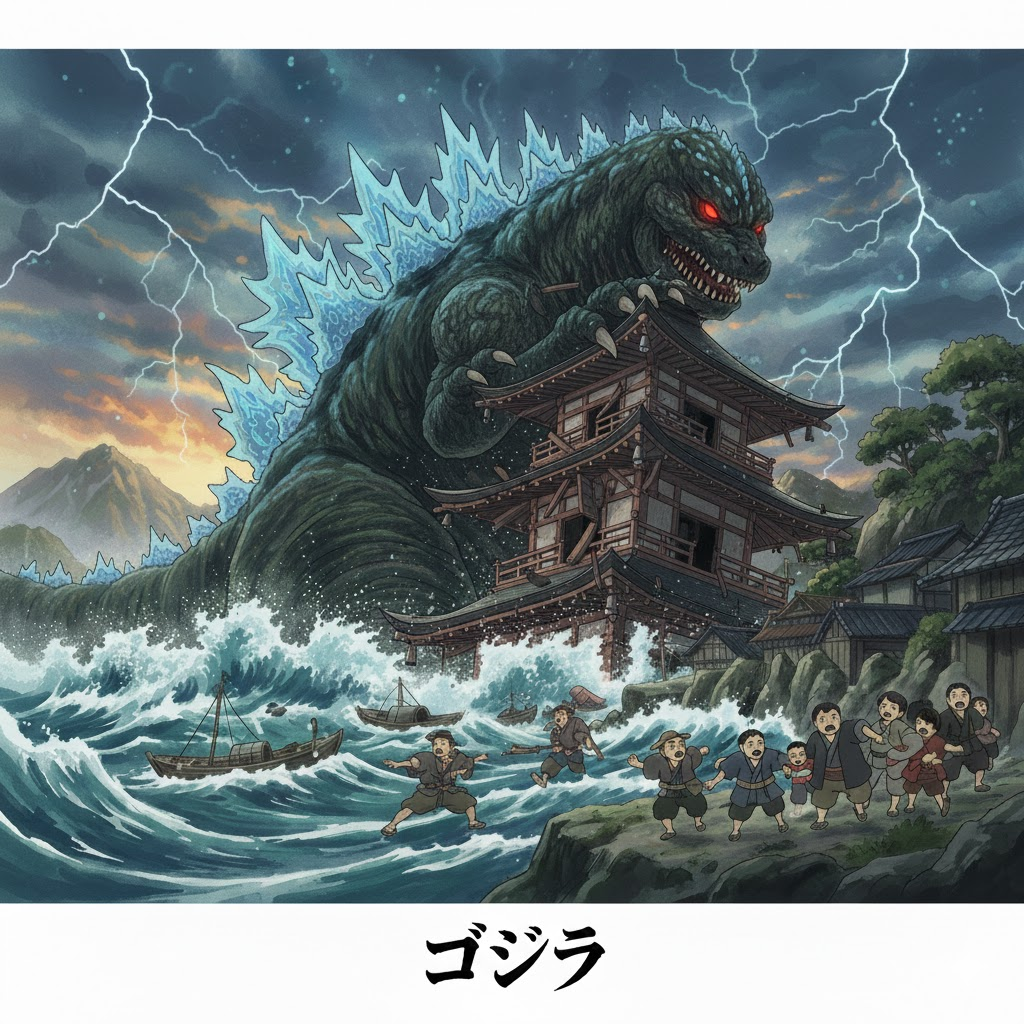
都市破壊シーンは大きな見どころです。特撮技術が光ります。ミニチュア撮影の伝統もあります。リアルさが緊張感を生みます。視覚的迫力が魅力です。
English
City destruction scenes are major highlights. Special effects shine there. Miniature shooting has a long tradition. Realism creates tension. Visual power attracts viewers.
会話例|Dialogue
EN: How were the old destruction scenes made?
JP: 昔の破壊シーンはどう作られましたか?
EN: They used miniatures and practical effects.
JP: ミニチュアと実写特撮が使われました。
語句メモ
- special effects = 特撮
- miniature = ミニチュア
- realism = 現実感
- tension = 緊張感
第8章|海外での人気 Chapter 8 | Global Popularity
日本語
ゴジラは世界中で知られています。ハリウッド版も制作されました。文化を超えて受け入れられています。怪獣という共通言語があるからです。映像の力は国境を越えます。
English
Godzilla is known worldwide. Hollywood versions were also made. It is accepted across cultures. Monsters are a universal language. Visual storytelling crosses borders.
会話例|Dialogue
EN: Why is the monster popular overseas?
JP: なぜ海外でも人気があるのですか?
EN: The theme is universal and visual.
JP: テーマが普遍的で映像的だからです。
語句メモ
- worldwide = 世界中で
- culture = 文化
- universal = 普遍的な
- border = 国境
第9章|英語学習に使える理由 Chapter 9 | Why It Helps English Learning
日本語
ゴジラ映画は英語学習にも向いています。テーマが明確で理解しやすいです。専門語彙も学べます。会話も比較的はっきりしています。繰り返し視聴に最適です。
English
Godzilla films are good for English learning. Themes are clear and easy to follow. You can learn technical vocabulary. Dialogue is often distinct. They are good for repeated viewing.
会話例|Dialogue
EN: Can movies really help language study?
JP: 映画は本当に語学学習に役立ちますか?
EN: Yes, stories make phrases memorable.
JP: はい、物語は表現を覚えやすくします。
語句メモ
- vocabulary = 語彙
- dialogue = 会話
- technical = 専門の
- repeat = 繰り返す
第10章|おすすめ視聴法 Chapter 10 | Recommended Study Method
日本語
まず日本語で見ます。次に英語字幕で見ます。印象的なセリフを音読します。要約を書きます。これで理解が深まります。
English
Watch first in Japanese. Next with English subtitles. Read key lines aloud. Write a short summary. Understanding will deepen.
会話例|Dialogue
EN: How should I study with movies?
JP: 映画でどう勉強すればよいですか?
EN: Watch, repeat, speak, and summarize.
JP: 見て、繰り返して、話して、要約します。
語句メモ
- subtitle = 字幕
- summary = 要約
- aloud = 声に出して
- deepen = 深める
第11章|ゴジラと科学テーマ Chapter 11 | Science Themes in the Films
日本語
ゴジラ映画では科学が重要な役割を持っています。新兵器、研究、実験、理論が物語を動かします。科学は希望として描かれる場合もあります。しかし同時に危険も示されます。使い方次第で結果が変わるというメッセージです。
English
Science plays a major role in Godzilla films. New weapons, research, experiments, and theories drive the story. Science is sometimes shown as hope. At the same time, it is shown as dangerous. The message is that results depend on how it is used.
会話例|Dialogue
EN: Is science always good in these stories?
JP: これらの物語で科学は常に良いものですか?
EN: It is powerful, but not always safe.
JP: 強力ですが、常に安全ではありません。
語句メモ|Vocabulary
- experiment = 実験
- theory = 理論
- weapon = 兵器
- depend on = ~に依存する
第12章|ヒーローか脅威か Chapter 12 | Hero or Threat?
日本語
作品によってゴジラの立場は異なります。恐怖の対象として描かれることもあります。逆に守護者として登場する場合もあります。この二面性が物語を面白くします。観客の解釈も分かれます。
English
The role of Godzilla changes by film. Sometimes it is pure terror. In other stories it acts as a protector. This dual nature makes the story interesting. Viewers interpret it differently.
会話例
EN: Is the monster a villain or a hero?
JP: その怪獣は悪役ですか、それとも英雄ですか?
EN: It depends on the story version.
JP: 物語の版によります。
語句メモ
- threat = 脅威
- protector = 守護者
- role = 役割
- interpret = 解釈する
第13章|シリーズ作品の楽しみ方 Chapter 13 | How to Enjoy the Series
日本語
シリーズ作品は順番に見ると理解が深まります。時代ごとの変化が見えます。テーマの移り変わりも分かります。比較しながら見るのも楽しい方法です。お気に入りの時代を見つけられます。
English
Watching the series in order deepens understanding. You can see changes by era. Theme shifts become clear. Comparing entries is also fun. You can find your favorite period.
会話例
EN: Should I watch in release order?
JP: 公開順に見るべきですか?
EN: Yes, you can see the evolution.
JP: はい、進化が分かります。
語句メモ
- series = シリーズ
- era = 時代
- compare = 比較する
- release order = 公開順
第14章|特撮技術の魅力 Chapter 14 | The Charm of Special Effects
日本語
特撮は日本映画の大きな強みです。着ぐるみ演技やミニチュア撮影があります。手作業の迫力があります。デジタルとは違う味があります。職人技が支えています。
English
Special effects are a major strength of Japanese cinema. Suit acting and miniatures are used. There is handmade power in the visuals. It feels different from pure digital work. Craftsmanship supports it.
会話例
EN: Why do practical effects feel real?
JP: なぜ実写特撮はリアルに感じますか?
EN: Physical objects create weight and texture.
JP: 実物には重みと質感があるからです。
語句メモ
- practical effects = 実写特撮
- miniature set = ミニチュアセット
- texture = 質感
- craftsmanship = 職人技
第15章|音楽とサウンドの力 Chapter 15 | Power of Music and Sound
日本語
音楽は怪獣映画の印象を決めます。重厚なテーマ曲があります。足音や咆哮も重要です。音が恐怖を強めます。サウンド設計も見どころです。
English
Music shapes the feeling of monster films. There are heavy main themes. Footsteps and roars are important too. Sound increases fear. Audio design is a highlight.
会話例
EN: Why is the theme music important?
JP: なぜテーマ音楽が重要ですか?
EN: It creates instant recognition and mood.
JP: すぐに分かる印象と雰囲気を作ります。
語句メモ
- theme music = テーマ音楽
- roar = 咆哮
- audio design = 音響設計
- mood = 雰囲気
第16章|メッセージ性の読み取り方 Chapter 16 | How to Read the Message
日本語
怪獣映画には比喩が多く使われます。直接説明されないこともあります。背景を考えると理解できます。社会問題が重ねられています。象徴として読むことが大切です。
English
Monster films often use metaphor. Messages are not always explained directly. Thinking about context helps understanding. Social issues are layered inside. Reading symbolically is important.
会話例
EN: Is the message always explicit?
JP: メッセージは常に明確ですか?
EN: No, sometimes it is symbolic.
JP: いいえ、象徴的な場合もあります。
語句メモ
- metaphor = 比喩
- context = 背景
- symbolic = 象徴的な
- layer = 層
第17章|英語音読トレーニング活用法 Chapter 17 | Using the Films for Reading Aloud
日本語
映画セリフは音読に最適です。感情が込めやすいです。短い文が多いです。繰り返し練習できます。発音とリズムが改善します。
English
Movie lines are perfect for reading aloud. Emotion is easy to add. Many sentences are short. You can repeat practice. Pronunciation and rhythm improve.
会話例
EN: How many times should I repeat lines?
JP: セリフは何回繰り返すべきですか?
EN: Repeat until it feels natural.
JP: 自然に感じるまで繰り返します。
語句メモ
- read aloud = 音読する
- pronunciation = 発音
- rhythm = リズム
- natural = 自然な
第18章|怪獣映画が残すもの Chapter 18 | What Monster Films Leave Behind
日本語
怪獣映画は娯楽以上の価値があります。時代の記録でもあります。社会への問いかけがあります。世代を超えて語られます。だから長く愛されます。
English
Monster films have value beyond entertainment. They are records of their times. They ask questions to society. They are discussed across generations. That is why they endure.
会話例
EN: Why do these films last so long?
JP: なぜこれらの映画は長く続くのですか?
EN: They mix spectacle and meaning.
JP: 見世物と意味を両立しているからです。
語句メモ
- endure = 長く続く
- generation = 世代
- spectacle = 見世物的迫力
- meaning = 意味
🦖 あとがき|Closing(日英)
日本語
ゴジラは単なる怪獣ではなく、時代と人間を映す巨大なメッセージです。恐怖、警告、希望が重なった象徴です。映画として楽しみながら、多くのことを学べます。日英対訳で読むことで、理解と語学力が同時に伸びます。ぜひ繰り返し読み、音読して、自分の知識にしてください。
English
Godzilla is more than a monster — it is a giant message about humanity and its times. It carries fear, warning, and even hope. You can learn much while enjoying the films. Reading bilingually improves both understanding and language skill. Read again, speak aloud, and make it your knowledge.

コメント