前書き|Introduction(日英)
1620年のメイフラワー号の航海は、単なる移住の出来事ではなく、信仰の自由・契約による統治・自治社会の始まりを象徴する歴史的事件です。本記事では、清教徒の背景、当時の宗教事情、航海の現実、到着後の苦難、そして政治思想への影響までを、散文形式で丁寧に解説します。さらに各章に長めの対話文と日英対訳を付け、英語学習と歴史理解を同時に進められる構成にしています。
The Mayflower voyage of 1620 was not just migration but a symbolic beginning of religious freedom, covenant government, and self-rule. This article explains the background, religious conditions, voyage reality, hardships, and political influence in detailed prose. Each chapter includes extended bilingual dialogue for both history study and English practice.
第1章|清教徒とは何者だったのか
Chapter 1|Who Were the Pilgrims?
清教徒と呼ばれる人々は、既存の教会制度では信仰が十分に実践できないと感じていた敬虔な人々でした。彼らは宗教を儀式よりも生活態度の中で表すべきだと考えていました。日常の労働、節制、誠実さこそが信仰の証だと見なしていました。豪華な礼拝や形式的な制度より、内面の純粋さを重視しました。この考え方は当時としては急進的でもあり、周囲との摩擦を生みました。彼らは妥協よりも分離を選ぶ傾向がありました。その姿勢が後の移住計画につながっていきます。
The people later called Pilgrims felt they could not fully practice faith within the existing church system. They believed religion should appear in daily conduct rather than ritual. Work, discipline, and honesty were signs of belief. They valued inner purity over splendid ceremonies. This view was radical for the time and created tension. They preferred separation to compromise. That attitude led toward migration.
対話|Dialogue
A: Were the Pilgrims against religion itself?
B: No, they were deeply religious people.
A: Then what were they opposing?
B: They opposed what they saw as corrupted practice.
A: Did they want reform or separation?
B: Many wanted separation to protect belief.
A: So lifestyle and faith were connected?
B: Completely connected.
A:清教徒は宗教そのものに反対していたのですか。
B:いいえ、とても信仰深い人々でした。
A:では何に反対していたのですか。
B:堕落したと感じた実践方法です。
A:改革ですか、それとも分離ですか。
B:多くは信仰を守るための分離でした。
A:生活と信仰は結びついていたのですね。
B:完全に結びついていました。
第2章|当時の宗教状況
Chapter 2|Religious Conditions
当時のイングランドでは、国家と教会制度が強く結びついていました。公的に認められた礼拝形式があり、それに従うことが社会秩序の一部とされていました。異なる礼拝方法や独自の解釈は、混乱の原因と見なされることもありました。制度への同調が安定の証拠と考えられていました。そのため分離的な信仰共同体は監視されやすい立場でした。罰金や圧力が加えられる場合もありました。自由な宗教活動は今ほど保障されていませんでした。
In England, church and state were closely linked. Official worship forms were defined and conformity supported order. Different practices were sometimes viewed as disruptive. Agreement with the system signaled stability. Separatist groups were often monitored. Fines and pressure could occur. Religious freedom was limited compared to today.
対話|Dialogue
A: Could people choose their own worship style?
B: Only within limits.
A: What happened if they refused?
B: They could face penalties.
A: Social pressure too?
B: Yes, very strong pressure.
A: That makes private belief difficult.
B: Exactly, and that pushed migration.
A:人々は自由に礼拝形式を選べましたか。
B:制限の範囲内だけでした。
A:拒否するとどうなりましたか。
B:罰則の可能性がありました。
A:社会的圧力も?
B:とても強かったです。
A:それでは個人信仰は難しいですね。
B:それが移住の動機になりました。
第3章|移住という決断
Chapter 3|The Decision to Migrate
彼らはすぐに新世界を目指したわけではありません。まずより寛容な地域へ移動しました。しかし言語や経済の問題があり、安定した生活基盤を築くのは容易ではありませんでした。次第に、自分たちの規範で暮らせる土地を求める発想が強くなります。共同体を一から作る構想が現実味を帯びました。危険な航海になることは理解していました。それでも信仰を守る価値の方が大きいと判断しました。こうして大西洋横断計画が具体化します。
They did not head to the New World immediately. They first moved to more tolerant regions. But language and economic problems remained. The idea grew to build a society under their own rules. Creating a new community became realistic. They knew the voyage would be dangerous. Still, faith was worth the risk. Plans to cross the Atlantic formed.
対話|Dialogue
A: Why not just adapt locally?
B: They felt belief would be diluted.
A: Was everyone willing to risk death?
B: Not everyone, debates were intense.
A: What convinced the majority?
B: The promise of self-rule.
A: Freedom over safety?
B: Yes, that was the trade.
A:現地に適応すればよかったのでは?
B:信仰が薄まると感じたのです。
A:命の危険も覚悟でしたか。
B:全員ではなく、激しい議論がありました。
A:多数を動かしたものは?
B:自治への希望です。
A:安全より自由ですか。
B:その選択でした。
第4章|メイフラワー号の現実
Chapter 4|Reality of the Ship
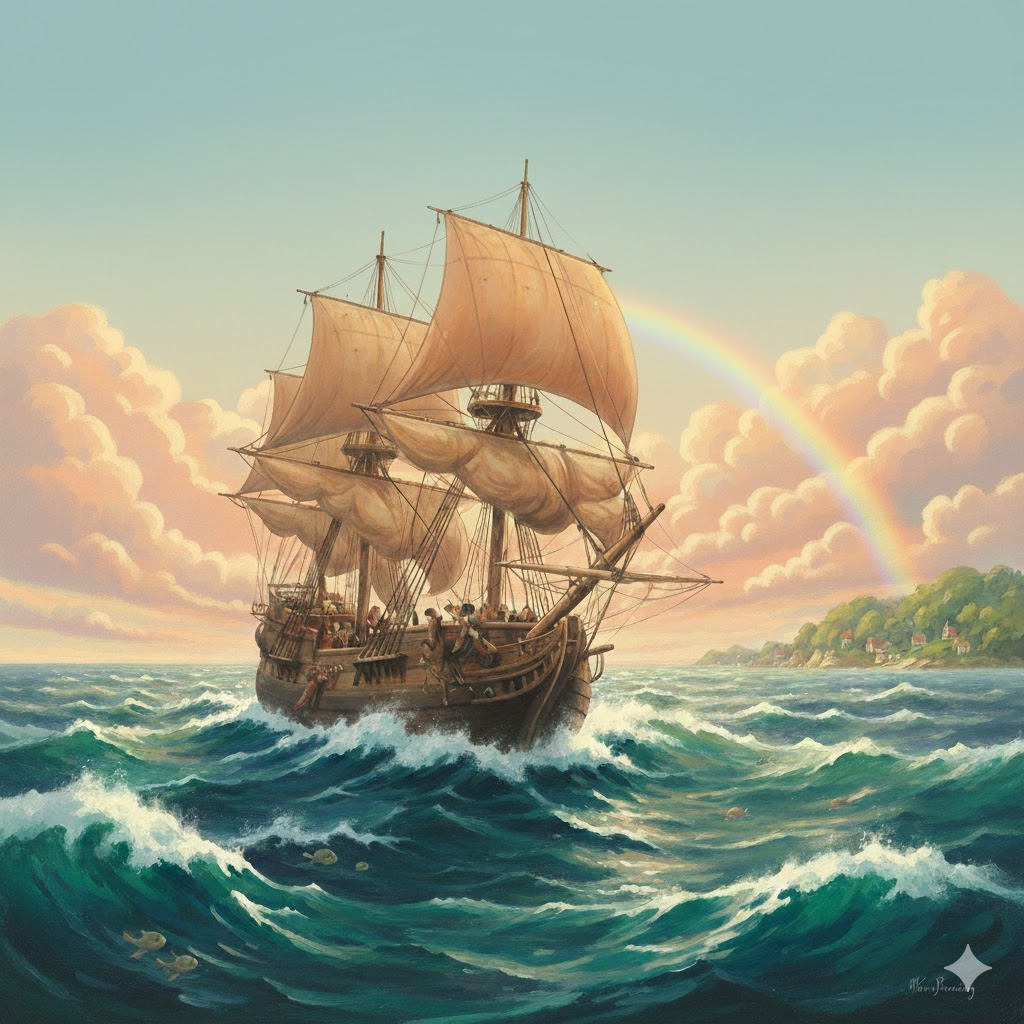
メイフラワー号は移民用ではなく貨物船でした。内部は低く、換気も悪く、長期滞在に向いていませんでした。寝床は簡易的で、プライバシーはほとんどありませんでした。食料は保存食中心で栄養が偏っていました。湿気と揺れが体力を奪いました。それでも人々は互いに励まし合いました。精神的な支えが旅を支えました。
The Mayflower was a cargo ship, not built for passengers. Space was low and poorly ventilated. Beds were simple with little privacy. Food was preserved and limited. Dampness and motion weakened people. Encouragement mattered. Morale sustained the voyage.
対話|Dialogue
A: Was daily life miserable onboard?
B: Often, yes.
A: Any medical care?
B: Very limited.
A: How did they endure it?
B: Faith and mutual support.
A: Community spirit mattered?
B: It was essential.
A: Without it they’d fail?
B: Most likely.
A:船内生活は悲惨でしたか。
B:多くの場合そうでした。
A:医療はありましたか。
B:ほとんどありませんでした。
A:どうやって耐えたのですか。
B:信仰と助け合いです。
A:共同体の力ですね。
B:不可欠でした。
A:それがなければ?
B:失敗していたでしょう。
第5章|到着と定住の開始
Chapter 5|Arrival and Settlement
到着地は現在のプリマス周辺でした。本来予定した場所ではありませんでしたが、冬が近づいていたため定住を決断します。まずは避難所と倉庫の建設を優先しました。周囲の自然環境を観察し、水源と土地を確認しました。計画より即応が求められました。判断の速さが生存率を左右しました。ここから入植の歴史が始まります。
They arrived near Plymouth, though off course. With winter coming, they settled there. Shelter and storage came first. They studied land and water sources. Quick decisions were required. Speed meant survival. Settlement history began.
対話|Dialogue
A: Why not keep searching?
B: Winter made it too risky.
A: Were supplies low?
B: Yes, very low.
A: So delay meant death?
B: Possibly.
A: Fast settlement saved them?
B: It increased their chances.
A: Improvisation mattered.
B: Absolutely.
A:なぜ探し続けなかったのですか。
B:冬が危険すぎました。
A:物資も不足?
B:かなり不足していました。
A:遅れは致命的?
B:その可能性がありました。
A:迅速な定住が鍵ですね。
B:生存率が上がりました。
A:即興の判断ですね。
B:まさにそうです。
第6章|自治の契約とその思想
Chapter 6|Covenant and Self-Rule
上陸前に彼らは統治の合意文書を作成しました。これは多数の同意に基づく統治の原型でした。身分ではなく合意が権威の源でした。秩序維持のための契約でした。共同体全員が従うことを誓いました。この思想は後の政治文化に影響します。契約社会の重要な先例です。
They created a governing agreement before landing. Authority came from consent, not rank. It maintained order. All agreed to obey it. It influenced later political culture. A key contract-society example.
対話|Dialogue
A: Why write rules before landing?
B: To prevent conflict.
A: Was it legally binding?
B: Socially and morally binding.
A: Everyone signed?
B: Representatives did.
A: That creates legitimacy.
B: Exactly.
A: Consent creates authority.
B: That was the idea.
A:なぜ上陸前に規則を?
B:対立防止のためです。
A:法的拘束力は?
B:社会的・道徳的拘束です。
A:全員署名?
B:代表者が署名しました。
A:正統性が生まれますね。
B:その通りです。
A:合意が権威を作る。
B:その思想です。
第7章|歴史的影響
Chapter 7|Historical Impact
この思想の流れは後のアメリカ合衆国の自治文化と契約思想に連続しています。地方自治の重視、合意形成、契約重視の社会観に影響しました。小規模共同体の実験が国家思想へとつながりました。理想と現実には差もありました。それでも思想的影響は大きいものでした。歴史は単線ではありません。多面的理解が必要です。
These ideas connect to later United States traditions of self-rule and contract thinking. Local governance and consent culture grew. A small community experiment influenced national ideas. Ideals and reality differed. Influence remained strong. History is not one-dimensional.
対話|Dialogue
A: Did they found a nation?
B: Not directly.
A: Then why so important?
B: They modeled consent rule.
A: Idea over size?
B: Yes, ideas travel.
A: Symbol more than scale?
B: Precisely.
A: That’s why remembered.
B: Exactly.
A:彼らが国家を作ったのですか。
B:直接ではありません。
A:ではなぜ重要?
B:合意統治を示したからです。
A:規模より思想?
B:思想は広がります。
A:象徴性ですね。
B:その通り。
A:だから記憶される。
B:そうです。
結び|Closing(日英)
メイフラワー号の航海は、信仰の自由、契約による統治、自治共同体という三つの重要概念を歴史に刻みました。散文と長文対話で読むことで、出来事の背景と思想の重みをより深く理解できます。英語学習・音読・歴史教育のすべてに活用できるテーマです。
The Mayflower voyage engraved three key ideas in history: religious freedom, covenant government, and self-rule. Through prose and extended dialogue, the background and meaning become clearer. It is useful for English learning, reading practice, and history education.

コメント