- Introduction / 前書き
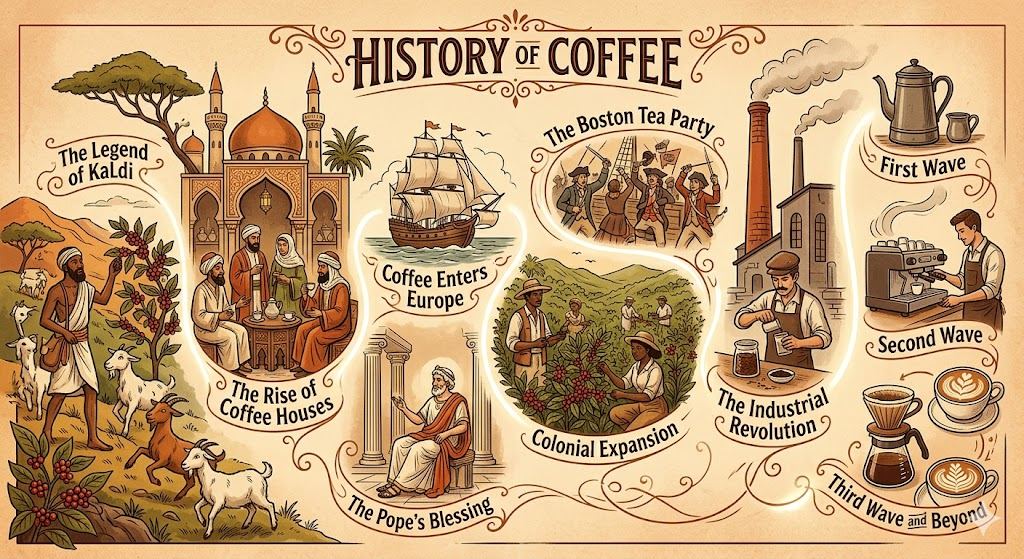
- Chapter 1: The Legend of Kaldi (エチオピアの伝説)
- Chapter 2: The Arabian Peninsula (アラビア半島と修道院)
- Chapter 3: The First Coffee Houses (コーヒーハウスの誕生)
- Chapter 4: Smuggling the Seeds (種子の密輸と拡大)
- Chapter 5: Coffee Enters Europe (ヨーロッパ上陸の波紋)
- Chapter 6: The Pope’s Blessing (教皇の祝福)
- Chapter 7: Colonial Plantations (植民地とジャワコーヒー)
- Chapter 8: The Boston Tea Party (アメリカとコーヒー)
- Chapter 9: The Industrial Revolution (産業革命とインスタント)
- Chapter 10: The First Wave (第1の波:家庭への普及)
- Chapter 11: The Second Wave (第2の波:スタバの登場)
- Chapter 12: The Third Wave and Beyond (第3の波と未来)
- Conclusion / あとがき
Introduction / 前書き
[English] Welcome to our new series, “The History of Coffee.” Most of us start our day with a fresh cup of joe, but have you ever wondered how this dark, aromatic drink conquered the world? From mystical legends in Ethiopia to the global culture we see today, we will explore the fascinating 1,000-year journey of coffee through 12 short chapters. Let’s dive into the rich world of coffee history together!
[日本語] 新シリーズ「コーヒーの歴史」へようこそ。私たちの多くは一杯のコーヒーで一日を始めますが、この芳醇な香りの飲み物がどのようにして世界を征服したのか、考えたことはありますか?エチオピアの神秘的な伝説から、現代のグローバルな文化まで。コーヒーが歩んだ魅力的な1000年の旅路を、12の短い章で紐解いていきます。奥深いコーヒーヒストリーの世界を一緒に覗いてみましょう!
Chapter 1: The Legend of Kaldi (エチオピアの伝説)
A: Have you heard the story of how coffee was first discovered? B: Not really. I only know it comes from Ethiopia originally. A: Legend says a goat herder named Kaldi noticed his goats acting very energetic. B: Energetic? Did they eat something unusual in the mountains? A: Yes, they were eating bright red berries from a specific shrub. B: So, those berries were the ancestors of our morning espresso!
A: コーヒーがどうやって発見されたか、その話を聞いたことある? B: あんまり。もともとはエチオピアのものだってことくらいしか。 A: 伝説によると、カルディというヤギ飼いが、自分のヤギがとても元気に跳ね回っているのに気づいたんだ。 B: 元気に?山の中で何か珍しいものでも食べたのかな? A: そう、ある特定の低木に実っている真っ赤な実を食べていたんだよ。 B: つまり、その実が僕たちが朝飲むエスプレッソの先祖だったってわけだね!
Vocabulary & Phrases / 語句メモ
- Goat herder: ヤギ飼い
- Energetic: 活動的な、元気いっぱいの
- Unusual: 珍しい、一風変わった
- Specific: 特定の
- Shrub: 低木(灌木)
- Ancestor: 先祖、原型
Chapter 2: The Arabian Peninsula (アラビア半島と修道院)
A: How did coffee travel from Ethiopia to the rest of the world? B: It first crossed the Red Sea to Yemen around the 15th century. A: I heard Sufi monks used it to stay awake during late-night prayers. B: That’s right. They called it “Qahwa,” which originally meant wine. A: So it was a spiritual tool before it became a morning routine. B: Exactly. It helped them focus on their devotion for hours.
A: コーヒーはどうやってエチオピアから世界中に広まったの? B: 15世紀頃に紅海を渡って、まずイエメンに伝わったんだ。 A: スーフィーの修道僧たちが、夜の祈りの最中に眠気を払うために飲んでいたって聞いたよ。 B: その通り。彼らはそれを「カフワ」と呼んでいた。もともとはワインという意味だったんだ。 A: 朝の習慣になる前は、精神修行の道具だったんだね。 B: まさに。何時間も祈りに集中する助けになったんだよ。
Vocabulary & Phrases / 語句メモ
Crossed: 渡った
Sufi monks: スーフィー教徒(修道僧)
Devotion: 祈り、献身
Chapter 3: The First Coffee Houses (コーヒーハウスの誕生)
A: Where were the first public places to drink coffee? B: They were called “Qahveh Khaneh” in cities like Istanbul and Cairo. A: Were they similar to the modern cafes we have today? B: In many ways, yes. People gathered there to talk and play chess. A: It sounds like they were centers of social activity. B: Definitely. They were often called “Schools of the Wise.”
A: コーヒーを飲むための最初の公共の場所ってどこだったの? B: イスタンブールやカイロのような都市にあった「カフヴェ・ハーネ」だね。 A: 今日のような現代的なカフェと似ていたのかな? B: 多くの点でイエスだね。人々が集まって話をしたり、チェスをしたりしていたんだ。 A: 社会活動の中心地だったみたいだね。 B: 間違いないよ。よく「賢者の学校」なんて呼ばれていたくらいだから。
Vocabulary & Phrases / 語句メモ
Public places: 公共の場
Gathered: 集まった
Schools of the Wise: 賢者の学校
Chapter 4: Smuggling the Seeds (種子の密輸と拡大)
A: Why did it take so long for coffee to grow outside Arabia? B: Because the Arabs strictly controlled the trade of fertile beans. A: How did the secret finally get out to other countries? B: A pilgrim named Baba Budan smuggled seven seeds to India. A: Only seven seeds changed the entire history of coffee? B: Yes, those seeds eventually led to global cultivation.
A: なぜコーヒーがアラビアの外で栽培されるまで、そんなに長くかかったの? B: アラブ人が発芽能力のある豆の貿易を厳重に管理していたからなんだ。 A: どうやってその秘密が最終的に他国へ漏れたの? B: ババ・ブダンという巡礼者が、7粒の種をインドへ密輸したんだよ。 A: わずか7粒の種が、コーヒーの歴史をすべて変えたってこと? B: そう、その種が結果的に世界中での栽培につながったんだ。
Vocabulary & Phrases / 語句メモ
Strictly controlled: 厳重に管理された
Fertile: 発芽能力のある
Smuggled: 密輸した
Chapter 5: Coffee Enters Europe (ヨーロッパ上陸の波紋)
A: When did Europeans first taste this “dark liquor”? B: In the 17th century, brought by merchants from the East. A: I heard some people were suspicious of it at first. B: Some called it the “bitter invention of Satan” due to its color. A: That’s a very dramatic name for a cup of coffee! B: It was so controversial that the Pope had to intervene.
A: ヨーロッパの人がこの「黒い飲み物」を初めて味わったのはいつ? B: 17世紀、東方からの商人によって持ち込まれたんだ。 A: 最初は疑いの目で見ていた人たちもいたって聞いたけど。 B: その色のせいで「サタンの苦い発明品」と呼ぶ人たちもいたんだよ。 A: コーヒー一杯にしては、すごくドラマチックな名前だね! B: それほど議論を呼ぶものだったから、教皇が介入しなきゃいけなかったんだ。
Vocabulary & Phrases / 語句メモ
Dark liquor: 黒い液体(お酒)
Suspicious: 疑わしい
Intervene: 介入する
Chapter 6: The Pope’s Blessing (教皇の祝福)
A: Did the Pope actually try the “Satan’s drink”? B: Yes, Pope Clement VIII decided to taste it for himself. A: What was his reaction to the controversial beverage? B: He loved it and said it would be a pity to let only infidels drink it. A: So he “baptized” the coffee to make it acceptable? B: Exactly. After his blessing, coffee spread rapidly across Europe.
A: 教皇は本当にその「サタンの飲み物」を試したの? B: ああ、教皇クレメンス8世は自分で味を確かめることにしたんだ。 A: その議論を呼んでいる飲み物に対して、どんな反応をしたの? B: 彼はそれを気に入って、「異教徒だけに飲ませておくのは惜しい」と言ったんだよ。 A: つまり、コーヒーに「洗礼」を施して、受け入れられるようにしたんだね? B: その通り。彼の祝福の後、コーヒーはヨーロッパ中に急速に広まったんだ。
Vocabulary & Phrases / 語句メモ
Pity: 残念なこと
Infidels: 異教徒
Baptized: 洗礼を施した
Chapter 7: Colonial Plantations (植民地とジャワコーヒー)
A: Where did the Dutch start growing their own coffee? B: They successfully planted it on the island of Java, Indonesia. A: Is that why we sometimes call coffee “Java”? B: Precisely. It became a huge commercial success for them. A: But I heard the plantation system had a dark side. B: Yes, it relied heavily on forced labor and exploitation.
A: オランダ人はどこで自分たちのコーヒーを栽培し始めたの? B: インドネシアのジャワ島での栽培に成功したんだ。 A: コーヒーのことをたまに「ジャワ」と呼ぶのはそのせい? B: まさに。それが彼らにとって大きな商業的成功になったんだ。 A: でも、プランテーション制度には暗い側面もあったって聞いたよ。 B: ああ、強制労働や搾取に大きく依存していたんだ。
Vocabulary & Phrases / 語句メモ
Precisely: その通り
Commercial success: 商業的成功
Exploitation: 搾取
Chapter 8: The Boston Tea Party (アメリカとコーヒー)
A: Why do Americans prefer coffee over tea historically? B: It all started with the Boston Tea Party in 1773. A: Because they boycotted British tea to protest taxes? B: Yes. Drinking coffee became a symbol of patriotism. A: So switching to coffee was a political statement! B: Right. It cemented coffee as the national drink of the US.
A: 歴史的に見て、なぜアメリカ人は紅茶よりコーヒーを好むの? B: すべては1773年のボストン茶会事件から始まったんだ。 A: 税金に抗議するためにイギリスの紅茶を不買運動したから? B: そう。コーヒーを飲むことが愛国心の象徴になったんだよ。 A: つまりコーヒーに切り替えることは政治的な意思表示だったんだね! B: その通り。それがコーヒーをアメリカの国民的な飲み物として定着させたんだ。
Vocabulary & Phrases / 語句メモ
Boycotted: 不買運動をした
Patriotism: 愛国心
Cemented: 固めた、定着させた
Chapter 9: The Industrial Revolution (産業革命とインスタント)
A: How did coffee change during the Industrial Revolution? B: There was a need for coffee that was quick and easy to make. A: Is that when instant coffee was finally invented? B: Yes, innovators like Satori Kato and George Washington developed it. A: It must have been very convenient for soldiers in the wars. B: It was. Mass production made coffee accessible to everyone.
A: 産業革命の間、コーヒーはどう変わったの? B: 素早く簡単に作れるコーヒーへのニーズが生まれたんだ。 A: インスタントコーヒーがついに発明されたのはその時? B: そう、加藤サトリやジョージ・ワシントンのような革新者たちが開発したんだ。 A: 戦争中の兵士たちにとっても、すごく便利だっただろうね。 B: ああ。大量生産によって、コーヒーは誰もが手に入れられるものになったんだよ。
Vocabulary & Phrases / 語句メモ
Industrial Revolution: 産業革命
Innovators: 革新者
Mass production: 大量生産
Chapter 10: The First Wave (第1の波:家庭への普及)
A: What exactly is the “First Wave” of coffee? B: It refers to the era when coffee became a household staple. A: You mean brands like Folgers and Maxwell House? B: Yes. The focus was on convenience and low price. A: So the quality wasn’t the top priority back then? B: Not really. It was more about keeping the pot filled.
A: コーヒーの「ファーストウェーブ」って具体的に何のこと? B: コーヒーが家庭の必需品になった時代のことを指すんだ。 A: フォルジャーズやマックスウェル・ハウスのようなブランドのこと? B: そう。利便性と安さに焦点が当てられていたんだ。 A: じゃあ、当時は品質は最優先事項じゃなかったの? B: あまりね。それよりも、ポットを常に満たしておくことが重要だったんだ。
Vocabulary & Phrases / 語句メモ
Household staple: 家庭の必需品
Convenience: 利便性
Top priority: 最優先事項
Chapter 11: The Second Wave (第2の波:スタバの登場)
A: How did coffee culture change with the “Second Wave”? B: People started caring more about the roast and the origin. A: This is when Starbucks became a global phenomenon, right? B: Exactly. It introduced espresso drinks and the “third place” concept. A: Going to a cafe became a luxury experience, not just a caffeine fix. B: Precisely. It turned coffee into a lifestyle brand.
A: 「セカンドウェーブ」でコーヒー文化はどう変わったの? B: 人々が焙煎や産地をより気にするようになったんだ。 A: スターバックスが世界的な現象になったのはこの頃だよね? B: その通り。エスプレッソ飲料や「サードプレイス(第3の場所)」という概念を導入したんだ。 A: カフェに行くことは単なるカフェイン摂取じゃなく、贅沢な体験になったんだね。 B: まさに。コーヒーをライフスタイルブランドに変えたんだよ。
Vocabulary & Phrases / 語句メモ
Phenomenon: 現象
Third place: 自宅でも職場でもない第3の場所
Caffeine fix: カフェイン摂取
Chapter 12: The Third Wave and Beyond (第3の波と未来)
A: What makes the “Third Wave” different from the others? B: It treats coffee like fine wine, focusing on artisanal craft. A: So things like direct trade and roasting profiles are key? B: Yes, and people appreciate the unique flavors of each bean. A: What do you think is next for the world of coffee? B: Sustainability and climate change will be the biggest challenges.
A: 「サードウェーブ」が他と違うのはどんなところ? B: コーヒーを高級ワインのように扱い、職人技に焦点を当てている点だね。 A: 直接取引や焙煎の特性(プロファイル)なんかが重要ってこと? B: そう、そして人々が豆それぞれの独自の風味を楽しむようになったんだ。 A: コーヒー界の次はどうなると思う? B: 持続可能性(サステナビリティ)と気候変動が最大の課題になるだろうね。
Vocabulary & Phrases / 語句メモ
Artisanal craft: 職人技
Roasting profiles: 焙煎の特性
Sustainability: 持続可能性
Conclusion / あとがき
[English] Thank you for following along with our 12-chapter journey through the history of coffee. We’ve traveled from the ancient mountains of Africa to the high-tech roasteries of the modern era. Coffee is more than just a source of caffeine; it is a bridge that connects cultures, drives economies, and fuels creativity. Next time you take a sip, remember the centuries of history hidden within your cup. Happy brewing!
[日本語] 「コーヒーの歴史」12章の旅にお付き合いいただき、ありがとうございました。アフリカの古き山々から、現代のハイテクな焙煎所までを巡ってきました。コーヒーは単なるカフェインの摂取源ではありません。それは文化をつなぎ、経済を動かし、創造性を刺激する架け橋なのです。次にコーヒーを一口飲むときは、そのカップに秘められた何世紀もの歴史に思いを馳せてみてください。それでは、素敵なコーヒータイムを!